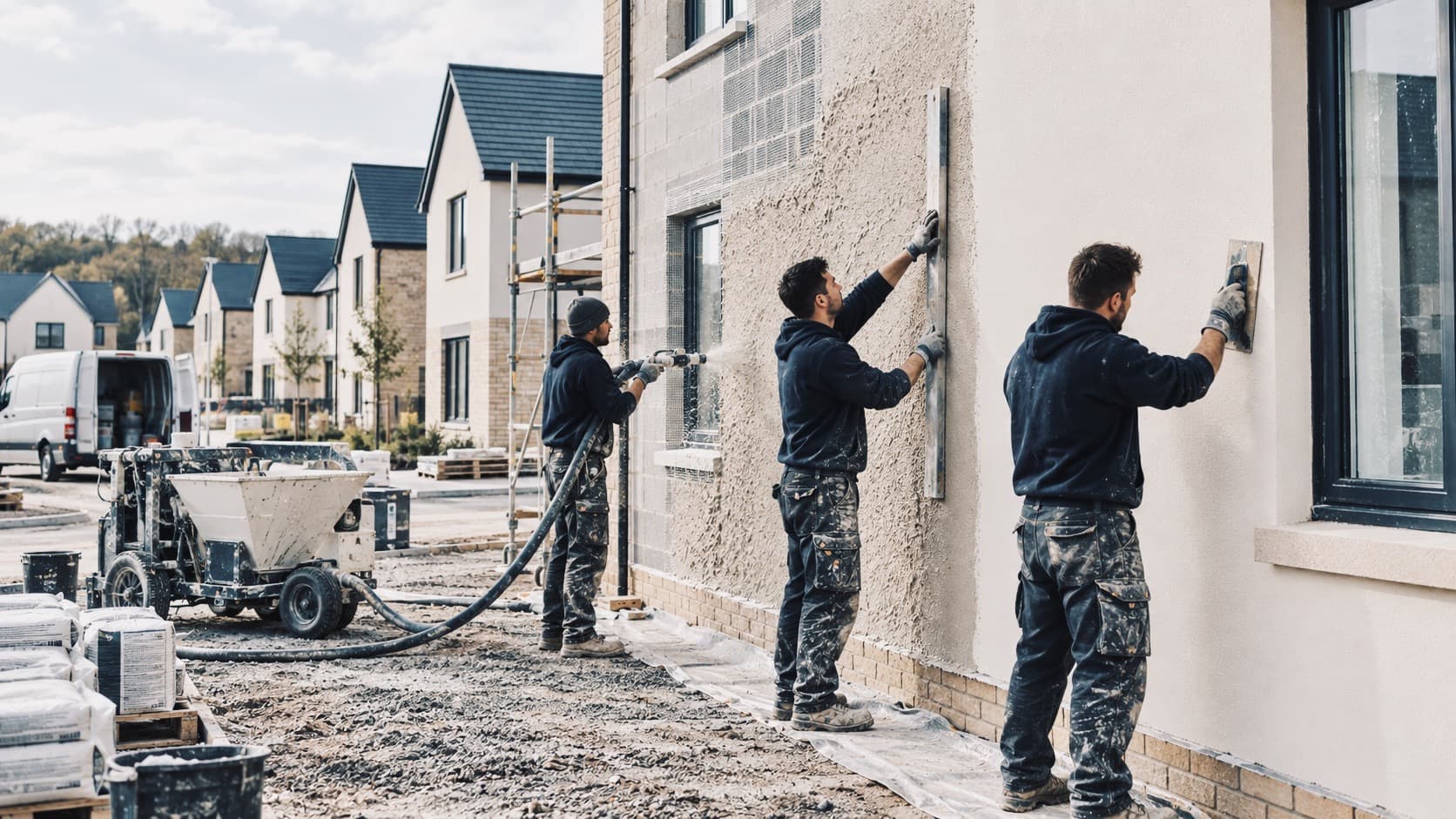
Should damaged exterior render be repaired or replaced?
A crack or damaged patch does not automatically mean an entire elevation needs re-rendering.
Equally, repairing the visible surface is not a good solution if the surrounding render has lost its bond or the defect is being caused by an unresolved problem underneath.
When might a local repair be suitable?
A local repair may be appropriate where the defect is genuinely isolated.
Examples include a small impact-damaged area, limited local detachment or a crack where the surrounding render remains secure and the cause has been understood.
The repair still needs to work with the existing render system.
That is particularly important with finished surfaces such as monocouche, where texture and colour form part of the render itself.
When might replacement be more sensible?
More extensive removal should be considered where problems are widespread rather than localised.
Warning signs can include:
- numerous hollow areas
- large sections losing their bond
- soft or friable render
- widespread cracking
- repeated repairs that continue to fail
- significant water-related deterioration
- an unsuitable or unstable existing background
Weber advises that further render should only be applied where existing work is sound and satisfactorily bonded, and cautions against adding render over soft or friable material.
What does hollow render mean?
Render that sounds hollow when checked can indicate that it has detached from the substrate or from another layer of the render build-up.
That does not necessarily tell you how large the failed area is.
A proper assessment looks beyond one tap point and considers the extent of any loss of bond across the elevation.
Small defective areas and widespread detachment lead to very different repair decisions.
Can cracked render just be filled?
Sometimes a fine, stable defect can be repaired locally.
But the crack itself is only the visible symptom.
Before deciding how to repair it, it is useful to consider whether it is static or continuing to move and whether there are related problems such as hollow render, moisture or failed detailing nearby.
Larger or recurring cracks should not simply be filled repeatedly without considering the cause.
Weber similarly distinguishes cosmetic crack repairs from damaged, hollow or defective render requiring a more involved repair method.
Why does exterior render fail?
There is no single cause.
Possible factors include movement in the building, loss of bond, water getting behind the finish, poor detailing, deterioration of older materials, contamination of the background or an unsuitable previous repair.
Often more than one factor is involved.
That is why identifying the cause matters before deciding how much material to remove.
Will a local repair be invisible?
Not always.
Even a technically successful repair can remain visible, particularly on textured or through-coloured finishes that have weathered for several years.
Colour, texture and exposure all influence how closely a new repair will match the surrounding wall.
Weber specifically notes that colour matching older monocouche can be difficult, particularly with more noticeable cracks or strongly pigmented finishes.
Sometimes redecorating a wider elevation can help unify a suitable painted finish; in other situations the appearance of the repair needs to be accepted as part of choosing a local rather than complete replacement.
What we look for
When assessing damaged render, we are interested in more than the most obvious crack.
We look at:
the extent of the affected area, whether surrounding render is securely bonded, signs of moisture, previous repairs, the existing render type and whether the defect appears local or part of a wider problem.
For an initial enquiry, send photographs of the full elevation as well as close-ups. A close-up by itself can make a small defect look much more significant than it is — or hide the fact that the same problem is present elsewhere.
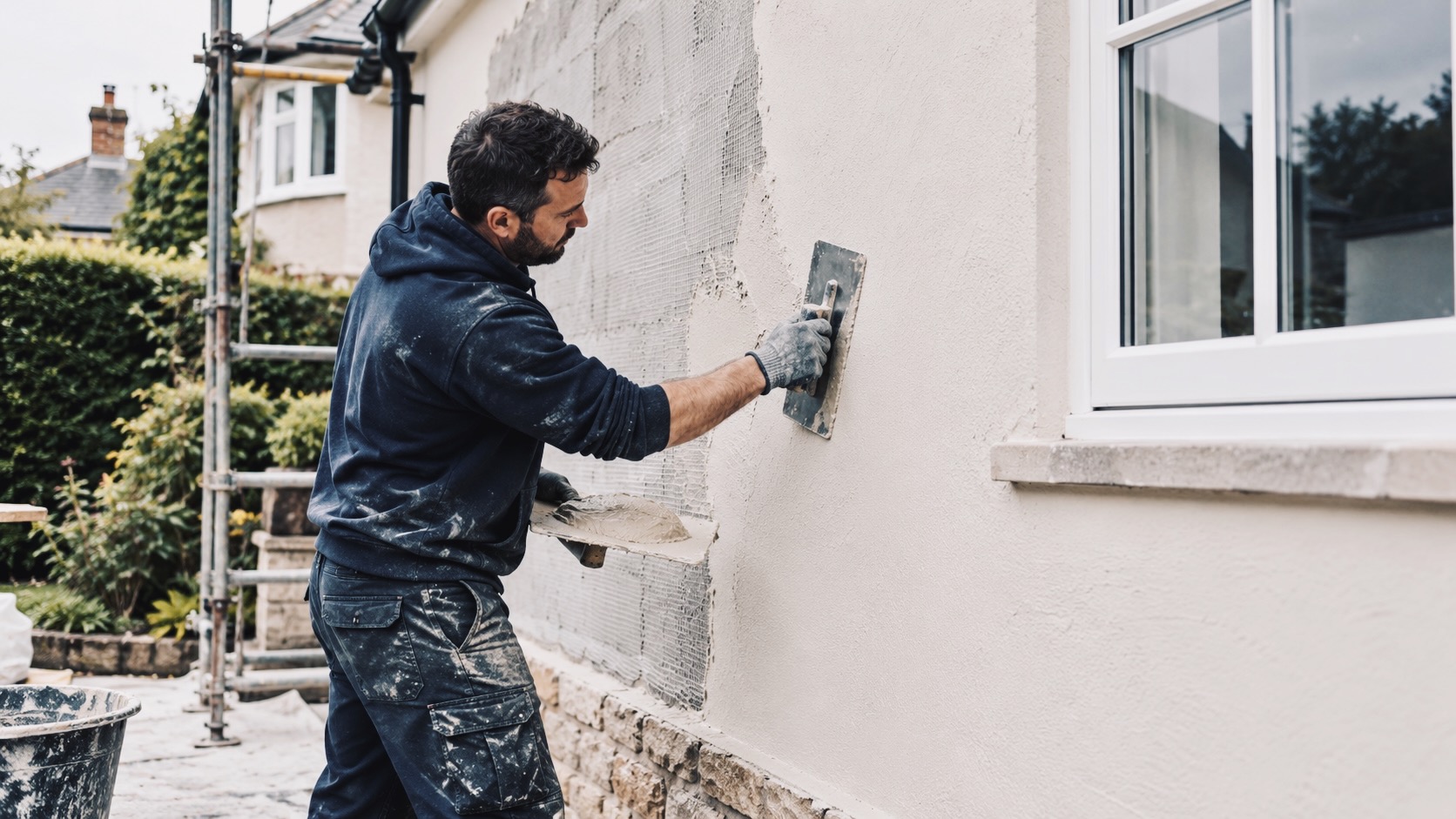
Not sure whether your render needs repairing?
Send photographs of the complete elevation and close-ups of the damaged areas. We can advise whether a local repair looks realistic or whether the wider surface needs assessing.