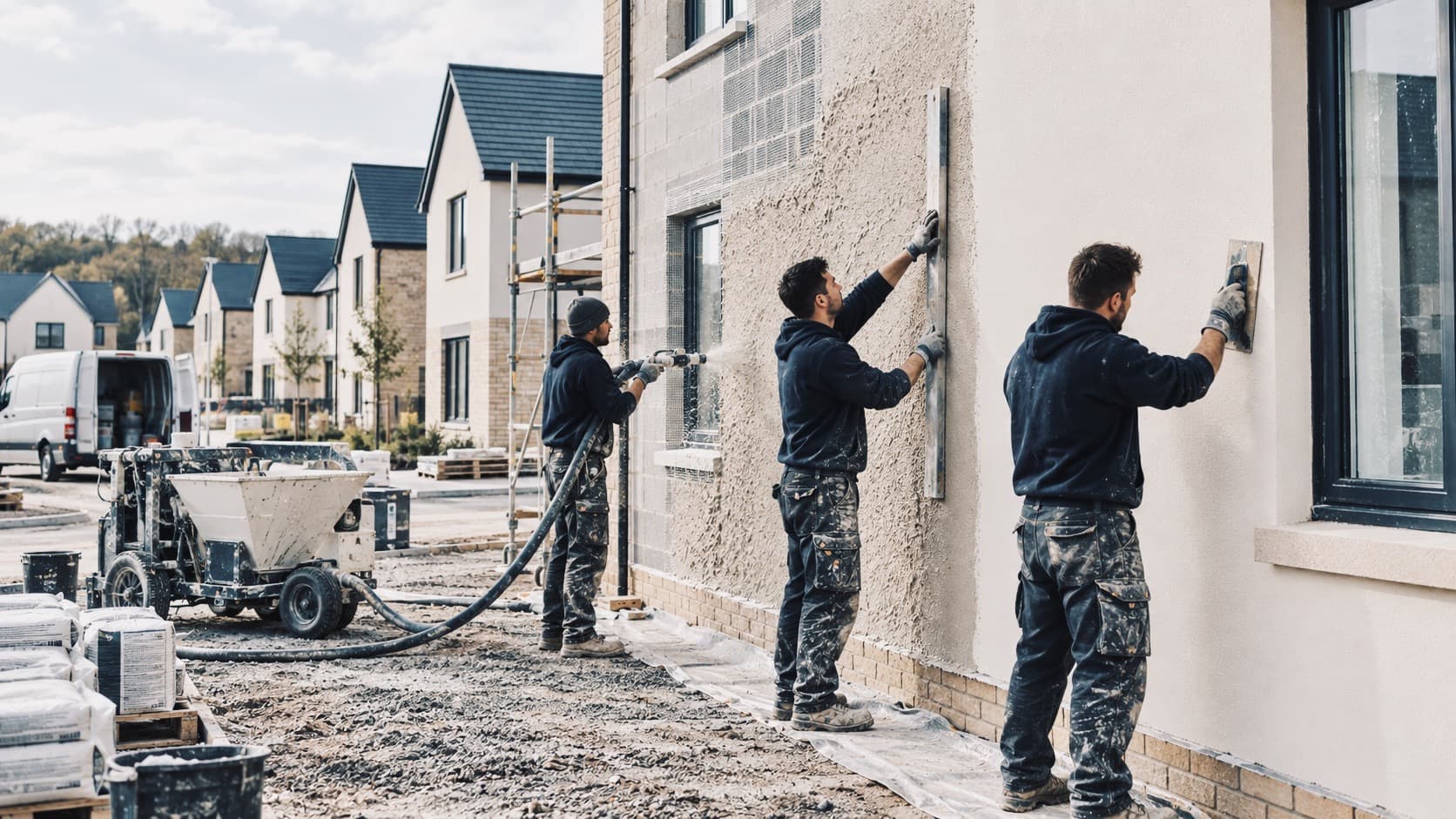
How to prepare a room for plastering
A little preparation before plastering starts makes the job easier, protects your belongings and gives the team clear access to the surfaces being worked on.
You do not need to strip the entire room yourself. In fact, removing the wrong fittings or pulling off old material unnecessarily can create additional work.
Before the plasterer arrives
Where practical:
- remove pictures, mirrors and wall-mounted decorations
- remove smaller furniture from the room
- move larger furniture away from the surfaces being worked on
- clear the route between the entrance and work area
- remove valuable or fragile items
- keep children and pets away from the working area
- make sure agreed water and electricity supplies are accessible
- let us know about restricted access or parking in advance
If only part of a room is being worked on, we can confirm how much space needs to be cleared beforehand.
What about floors and furniture?
Plastering is a wet trade, so protecting nearby finishes matters.
Before work begins, it should be clear which floors, furniture and fixed items need protecting and what protection is included as part of the job.
If you have particularly delicate flooring or recently installed finishes, mention them when arranging the work rather than waiting until the day.
Curtains, blinds and wall fittings
Curtain poles, blinds, shelving and similar fittings may need to be removed when they obstruct the area being plastered.
That does not mean everything attached to a wall automatically has to come down.
Send photographs beforehand if you are unsure. It is much easier to agree what needs moving before the work starts.
What about sockets, switches and radiators?
Do not start disconnecting electrical fittings, radiators or plumbing simply because plastering is planned.
Whether they need moving depends on the scope of the job, and electrical or plumbing work should be carried out by someone competent to do it.
The same applies to damaged existing plaster: avoid pulling large areas off yourself unless this has been discussed.
Unnecessary removal can turn a straightforward job into a larger repair.
Should wallpaper and loose finishes be removed first?
This depends on what is being plastered and the condition of the existing background.
Loose wallpaper, failing coatings and unstable material cannot simply be ignored, but preparation should suit the actual surface and the plaster system being used.
British Gypsum guidance similarly stresses the importance of removing loose or unstable material and preparing back to a sound background before skimming.
If you are unsure, send photographs before stripping anything.
Access on the day
Plaster and equipment have to be carried into the property, so a reasonably clear route is helpful.
For larger rooms, ceilings or external work, additional equipment may also be required.
Let us know in advance about narrow access, permit-controlled parking, communal entrances or anything else likely to affect how the job is set up.
What you usually don't need to do
You normally do not need to:
remove sound plaster just because it is old; disconnect electrical fittings without agreement; remove radiators without discussing them; attempt structural repairs; or make the room completely empty if larger items can be safely protected and positioned away from the work.
The aim is simply to provide safe, practical access.
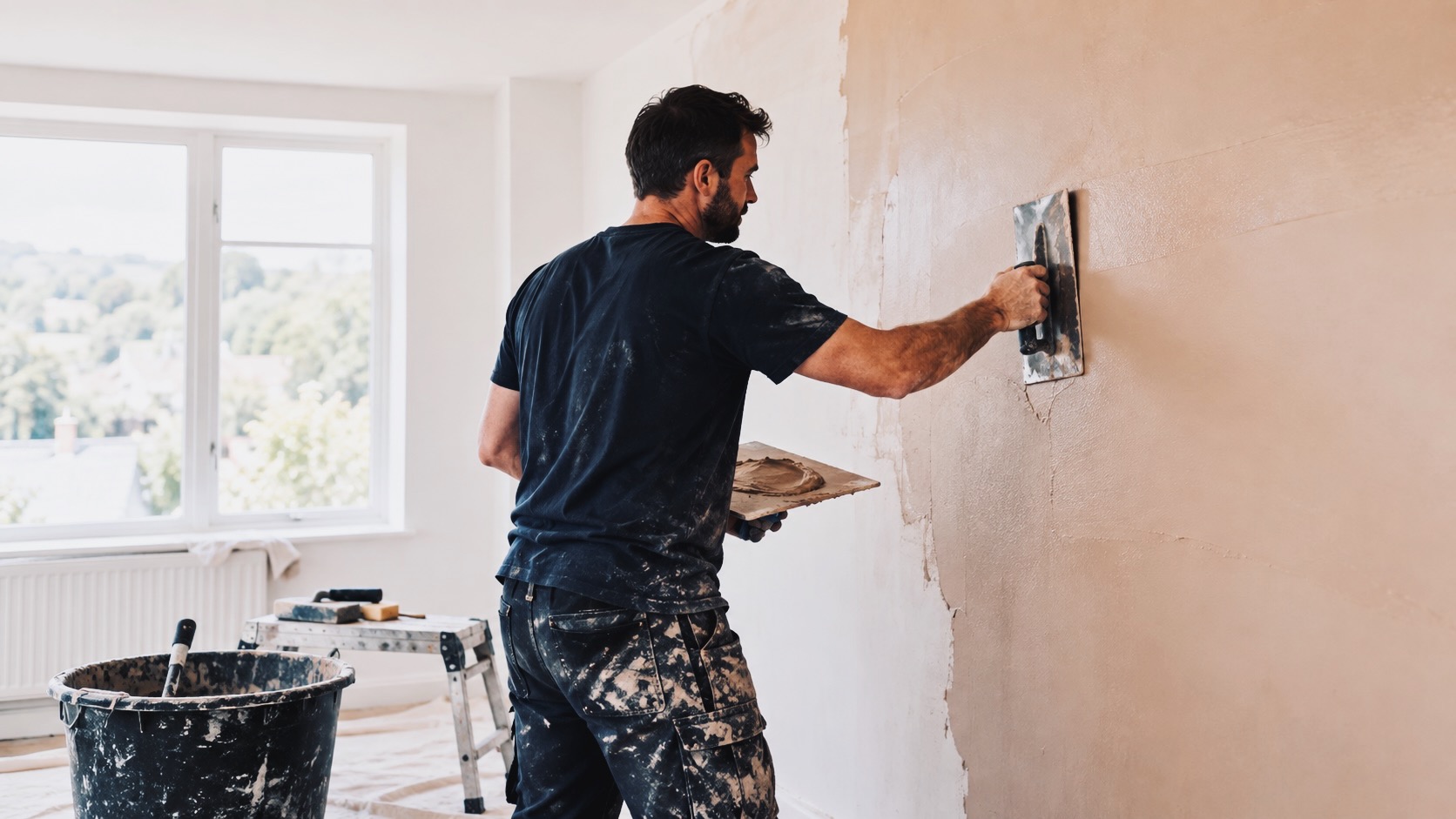
Planning plastering work?
Send us photographs of the room and a short description of the work required. We can confirm anything that needs preparing before we arrive.